

Back to the future
Culture in a free Iran and Kurdistan

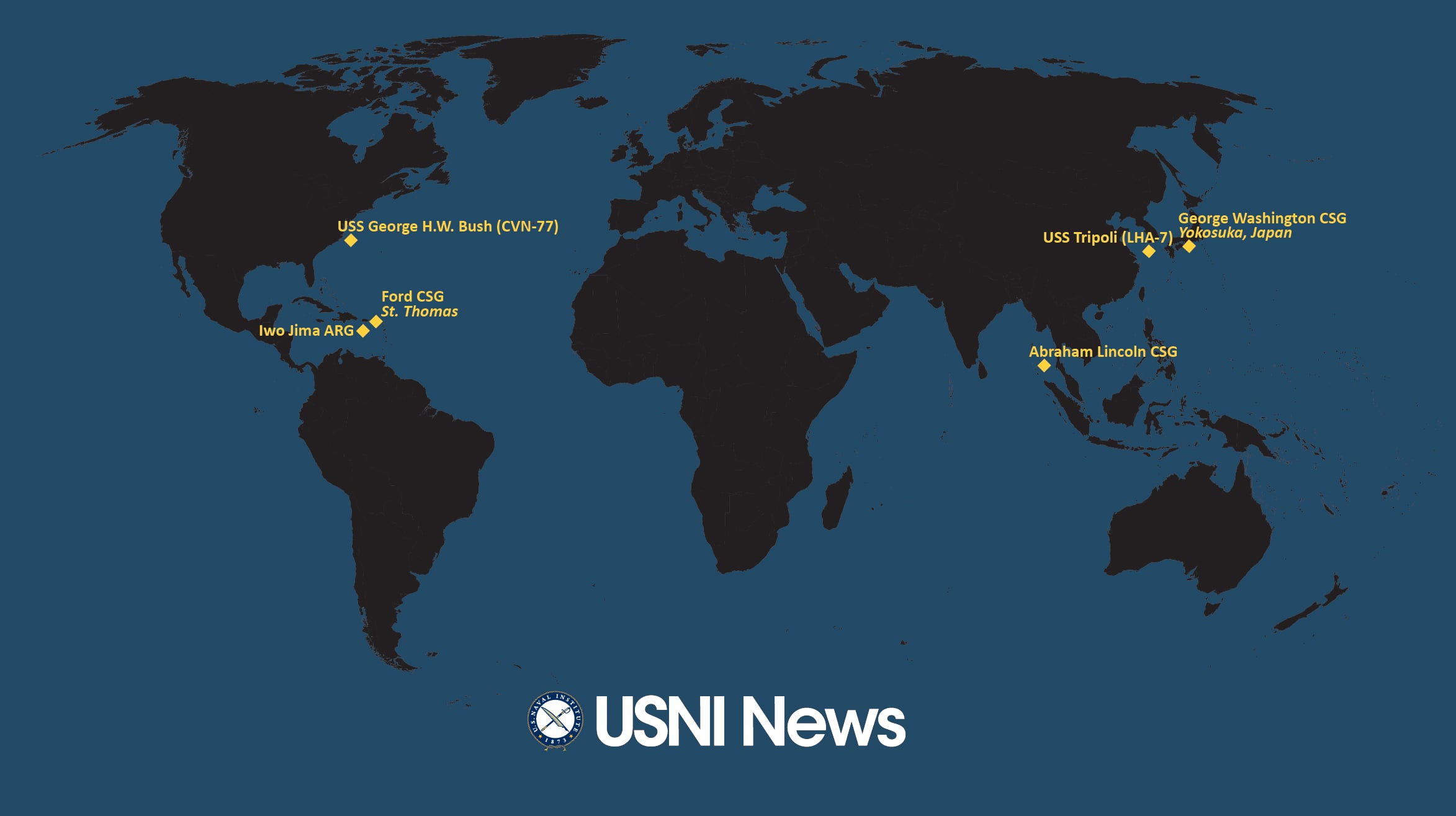
The latest news on the disposition of America's carrier strike groups has the USS Abraham Lincoln in the northeastern Indian Ocean, putting it about a week away from the Arabian Sea.
The remarks of Steven Witkoff minimizing the conflict with Iran are disappointing and infuriating. I hope this is a feint to allow for a strike on the Islamic Republic regime, to free the long suffering people of that region.
Reading the social media posts of many exiled Iranians, it is clear that they are disgusted by the regime and all it represents. They want to return to their proud roots.
Here is a 2’ 16” track from an album of traditional Persian music. It is a love song called “The Wheat Flower”.
I have discovered that people generally prefer the name Iran for the whole country (related to Aryan). Persia is the name for a very large province in the southwest of Iran, the home of the most numerous ethnicity in Iran, the Persians. They give their name to the biggest language in the country, Parsi. (“Farsi” is the Arabic name for the language, because Arabic does not contain the letter “p”.)
Do not wish the rebels well with the phrase “Inshallah” (“God willing” in Arabic). They associate this phrase with Islam, which they see as a foreign (Arab) imposition on their older Indo-European culture.
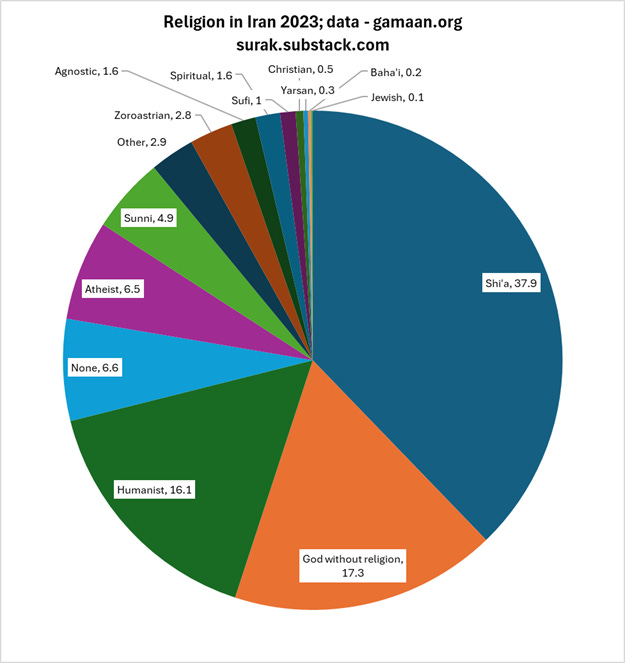
Here is a breakdown of religion in Iran recently, from this survey.
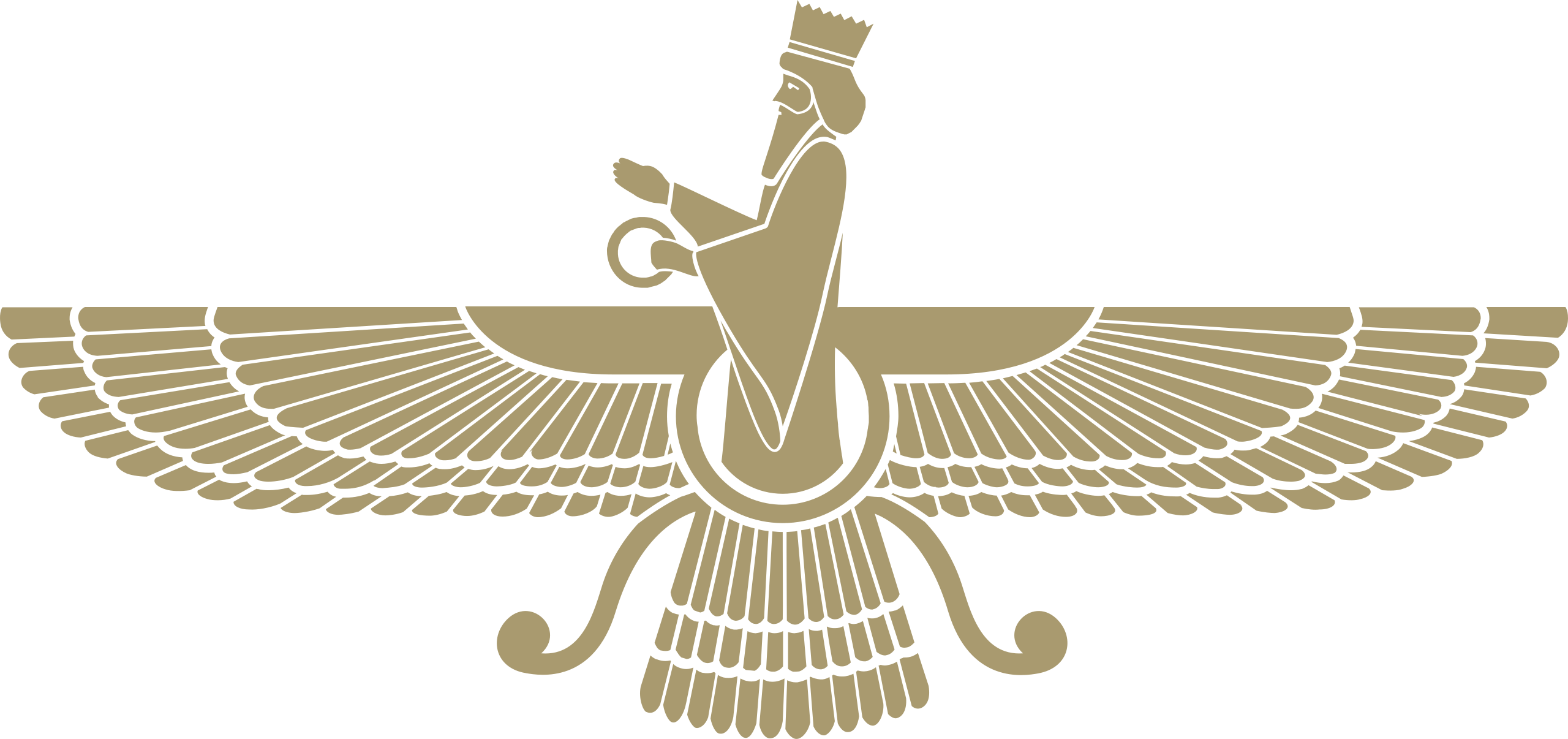
Zoroastrianism was the ancient, traditional religion of most of Persia and the Kurds until the Arab Muslim conquest. It is roughly as old as Judaism, with some disputes about which came first. It is a monotheistic religion teaching the importance of “good thoughts, good words, good deeds”.
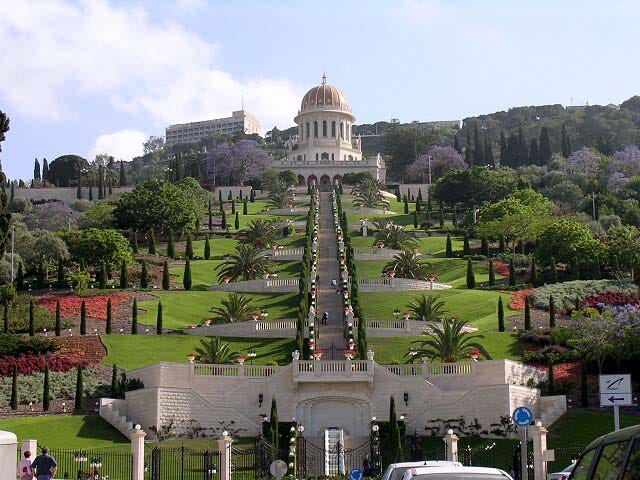
Baha’i is a syncretic religion that began in Persia during the 19th century. It acknowledges holy messengers from Judaism, Hinduism, Zoroastrianism, Buddhism, Confucianism, Christianity, and Islam. Due to persecution in Persia, the founders fled to Ottoman Palestine; their world headquarters is in Haifa, Israel.
The scriptures of both religions are beautiful. Hopefully, the Iranian people will find solace in returning to their dignified cultural roots.
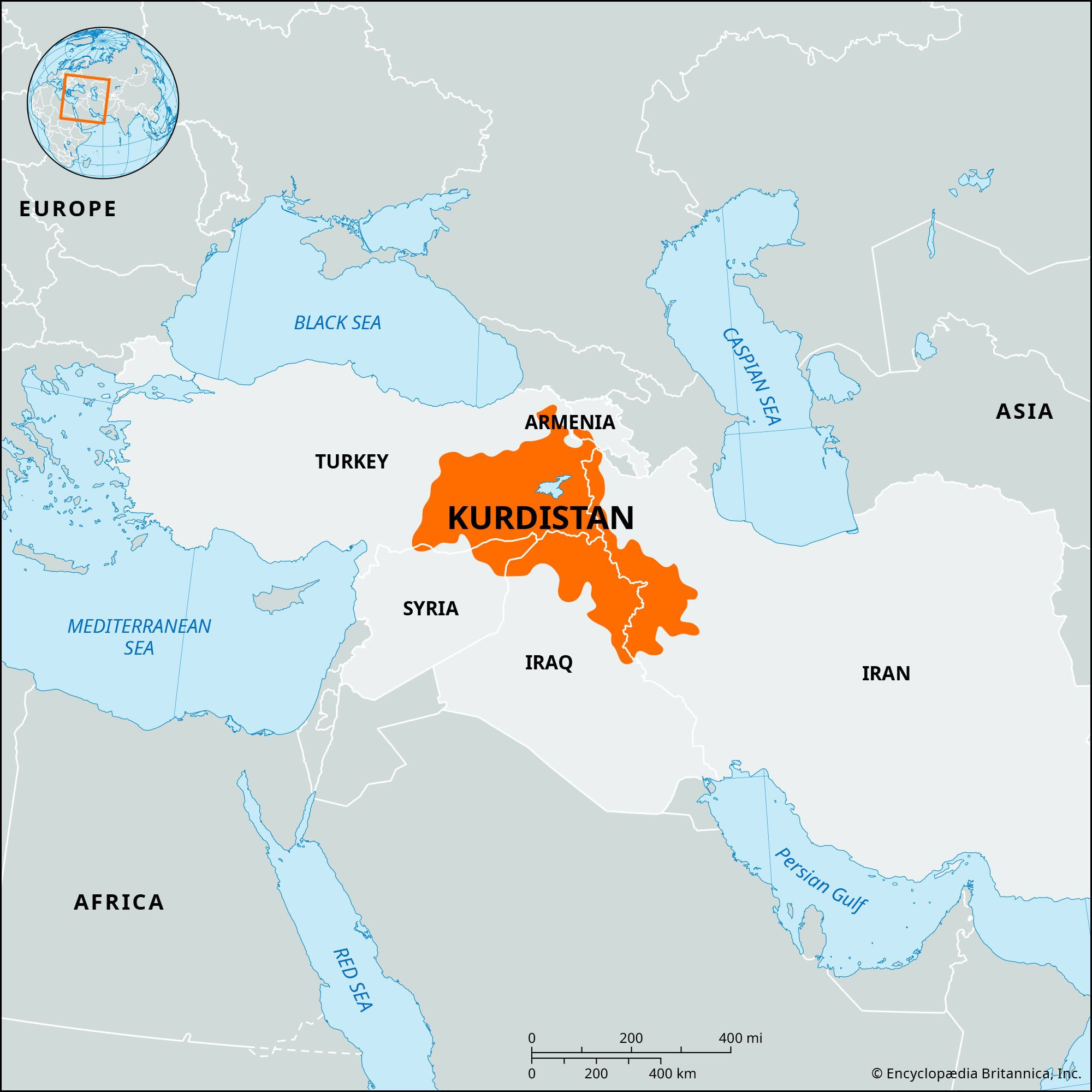
Social media posts are showing frustration on the part of the exiled friends and families of many martyrs of the revolution, who are from the northwest of Iran, the ancient kingdom of Media: the Kurdish people, described by some as the world’s most numerous stateless people. Their homeland of Kurdistan comprises portions of four extant countries. This map is from Britannica.
There are at least:
14.3 million Kurds in Turkey
8.2 million Kurds in Iran
5.6 million Kurds in Iraq
1.5 million Kurds in Syria
This gives a total close to 30 million in the region.
This people, like the Iranians, were forced to convert to Islam centuries ago, but some Zoroastrians remain, along with Yazidis, Christians, and Jews. They tend to be pro-Western, pro-America, and pro-Israel. They are extremely frustrated at their repeated betrayals by Western powers, who have promised them a state several times since World War 1, but have abandoned them in the face of massacres.
I support a #FreeIran and #FreeKurdistan . I have added to my prayers the following: “May it be Your will before You, O Lord our God and God of our ancestors, that You grant freedom and peace to the Persian nation and to the Kurdish nation.”
Surak, thanks for the education. Now I can see why previously Iran was friendly to Israel than the other Muslim-Arab nations. Iran is far more diversified religiously.